Published by Kiddopia Team

 Ages 2–7 · Educational · Learning
Published by Kiddopia Team
Ages 2–7 · Educational · Learning
Ages 2–7 · Educational · Learning
Published by Kiddopia Team
Ages 2–7 · Educational · Learning

A three-year-old can tell you a long, rambling story about a dog who drives a school bus. Five minutes later, the same child will be on the floor in tears because you cut their toast into rectangles. Triangles were the plan. Everyone knew that except you.
A lot is going on at this age. New words turn up every day, little fingers get steadier, and pretend games start to have actual storylines. The good news is that activities for 3-year-olds can be pretty simple. Most of the time, you're giving your child a place to use up energy and a reason to try something new.
Somewhere between the third and fourth birthday, most kids move from short phrases to full sentences. They ask "why" constantly. They learn to use scissors, with you hovering nearby. Balance and climbing improve, and so does their grip on small things like beads and crayons.
Almost all of this happens through play. Learning activities for 3-year-olds rarely look like school. It's usually splashing in the tub, stacking blocks, or a long chat about bugs. You don't need a lesson plan for any of it.
Talk to your child about whatever you're doing. Describe the steps while you cook. Ask about the drawing they just finished. Let them "read" a favorite book back to you from memory, and be ready for how much they've soaked up, including a few things they probably heard on your phone calls.
Sock puppets are great for chatty play. Hand your child a puppet and ask it a question. Plenty of shy kids will talk for ages once the sock is the one doing the talking.
Reading together helps language more than almost anything else. In Kiddopia, Little Readers has read-alouds with cute animals, while VOOKS has animated stories about growing up, big feelings, and small challenges. Your child can listen along or read alone, and they'll pick up new words and clearer pronunciation along the way.
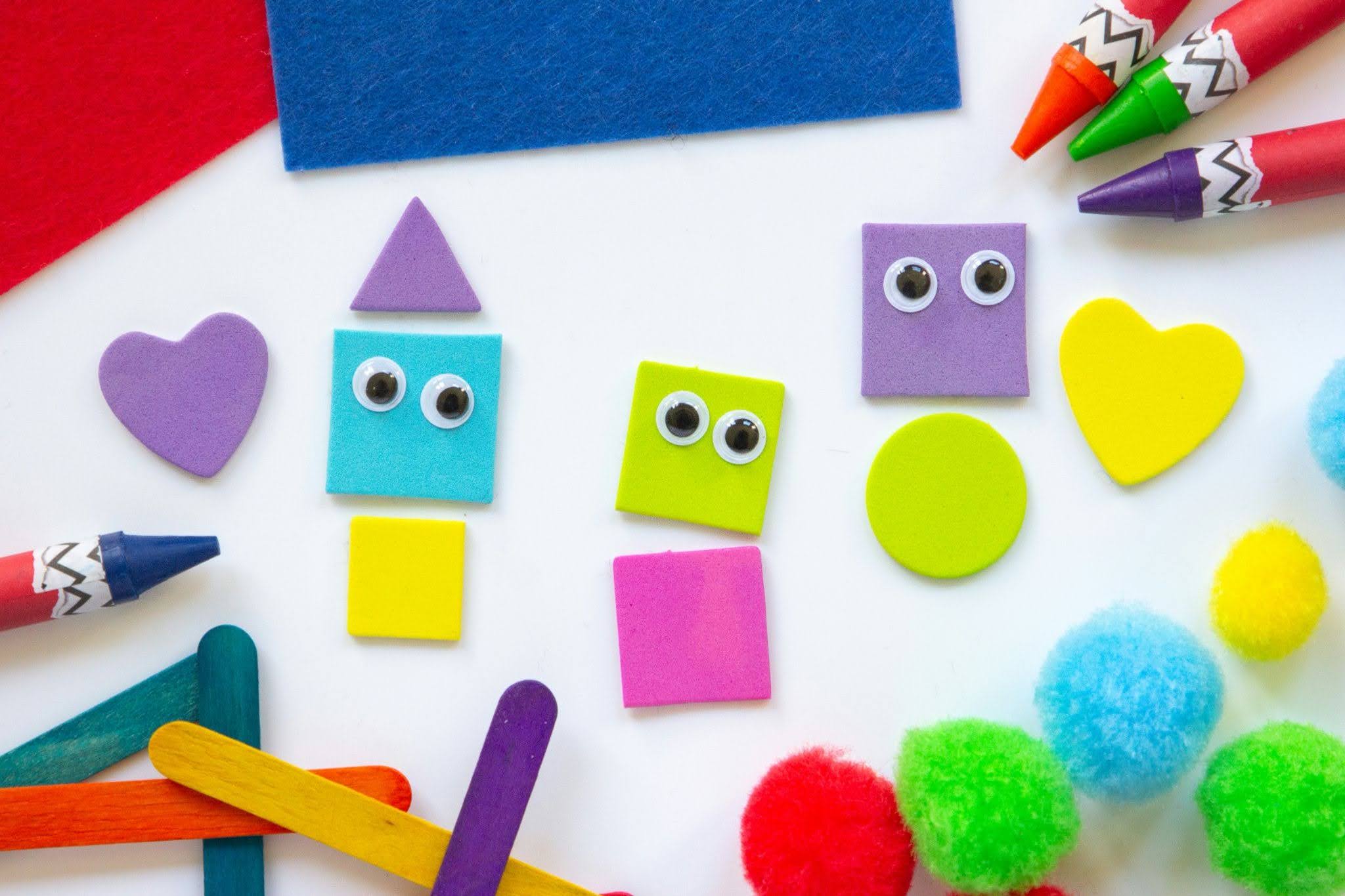
Fine motor skills help kids hold a crayon, work a zipper, and later write their names. Fun activities for 3-year-olds build these without any extra effort from you. Playdough is the obvious one. Rolling it, squishing it, and cutting it with a plastic knife gives those small hand muscles plenty of work.
You can also try moving pom-poms from one bowl to another with kitchen tongs, pouring water between cups at bath time, or peeling stickers onto paper. For bigger movement, turn the couch cushions into an obstacle course and let your child crawl and climb over them. The cushions can go back later.
Three-year-olds are very good at pretending. A cardboard box can be a rocket in the morning and a house for a stuffed rabbit by lunch. Put a blanket over two chairs, and you have a cave. Add a toy phone and some dress-up clothes, and the afternoon mostly plans itself.
Let your child decide where the game goes. If the kitchen becomes a restaurant, order something and wait to see what shows up. These are the activities for 3-year-olds that help with storytelling, problem-solving, and getting along with other people.
For a screen-based adventure, your little one can try our game, Alex the Explorer. They’ll help Alex fix a broken vase or a treehouse, take care of a dolphin with a boo-boo or an octopus with a fever, and fly a rocket out to meet some adorable aliens. There's roleplay in there, plus plenty of problem-solving.
Some days are rainy, and some days you're tired. Keep a small box of indoor activities for 3-year-olds for those afternoons. Playdough, a couple of puzzles, stickers, and a few library books are enough. Swap things in and out every week or two so it doesn't get boring.
Short sessions work best, somewhere around 10 to 20 minutes. Stop while your child is still enjoying it. Losing interest suddenly is normal at three, so offer a variety of activities for 3-year-olds and pay attention to which ones they come back to.
Join in when you can. Your child doesn't care whether an activity is perfect. They want you playing with them. And if the restaurant in your kitchen only serves toast cut into triangles, you'll know who's in charge.


Works for both iOS & Android
via smart one-link redirect