Published by Kiddopia Team

 Ages 2–7 · Educational · Learning
Published by Kiddopia Team
Ages 2–7 · Educational · Learning
Ages 2–7 · Educational · Learning
Published by Kiddopia Team
Ages 2–7 · Educational · Learning
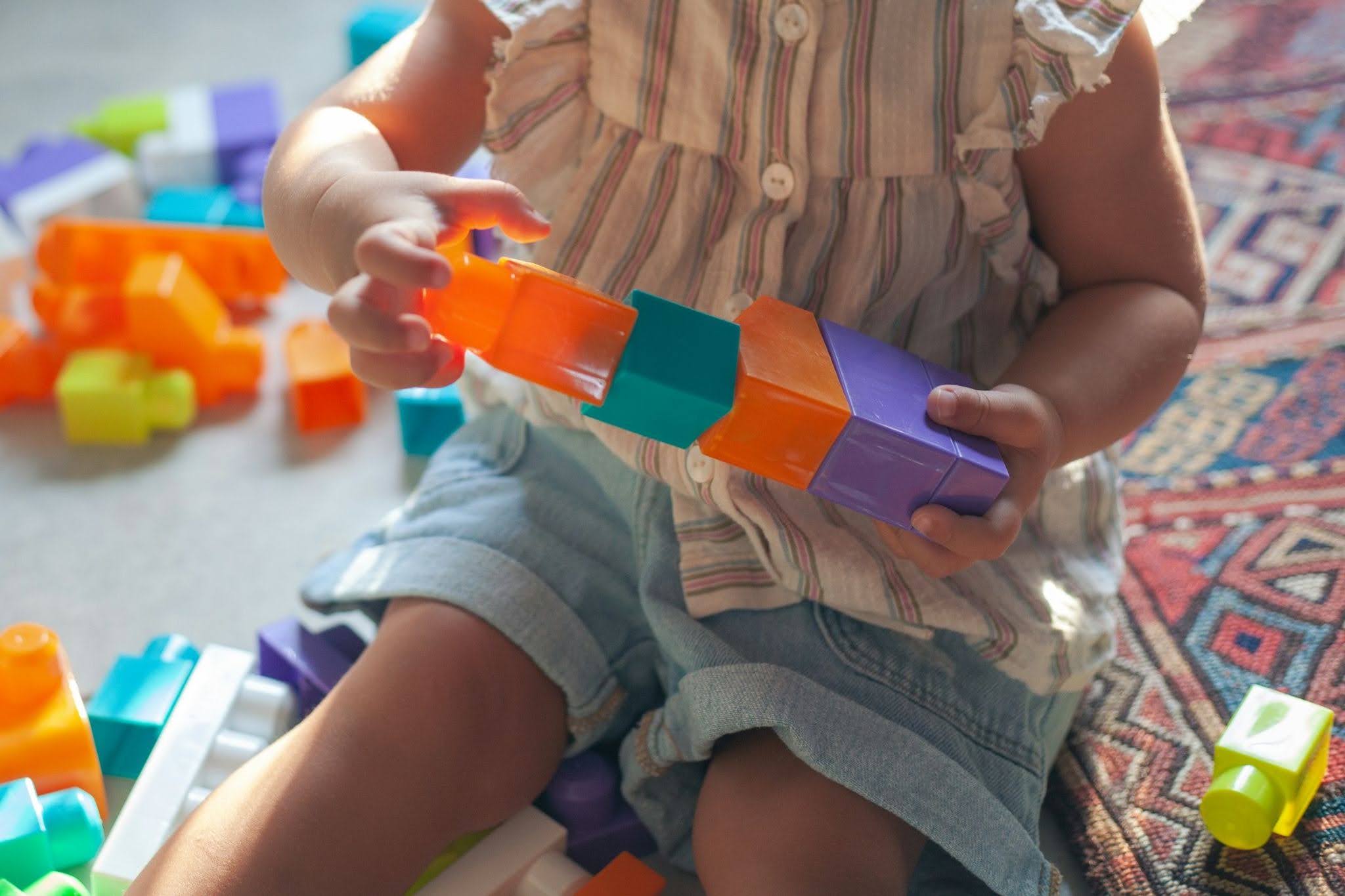
Watch a preschooler try to button a shirt, and you will see something that looks less like dressing and more like a telepathic negotiation with a very small piece of plastic. It takes forever, and at least one button ends up in the wrong hole. Oh, but every second of that struggle is doing something important.
Those small movements are exactly how fine motor skills get built, and they matter far more than most parents realize until their child picks up a pencil for the first time.
Fine motor skills are the small-muscle movements that let your child perform precise, controlled actions in daily life: holding a crayon, spooning cereal without redecorating the table, and such. They differ from gross motor skills like running and jumping. Fine motor function specifically involves the hands, fingers, and eyes working in close, careful sync.
Oh, and here is something that surprises a lot of parents: fine motor abilities are not just about the hands; they are also about focus, patience, and the ability to slow down long enough to do something carefully. That's a lot of work for a four-year-old who would rather be running.
Strong fine motor abilities in the preschool years make a real difference when formal schooling begins. Writing is the obvious one: children who have practiced careful, controlled hand movements that build fine motor function tend to find holding a pencil far less frustrating. But it goes beyond handwriting. Paying attention to fine motor function early is a quiet gift you can give your child before school starts.
Good fine motor abilities help with self-care tasks like dressing and eating independently, with art projects that require precision, and with the focused attention classroom life demands. A child who has had plenty of fine motor activities for preschoolers tucked into their days tends to walk into kindergarten with a practical head start that doesn't show up on any checklist but shows up everywhere in real life.
What does fine motor development actually look like in a preschooler? Some fine motor skills examples include pressing playdough into shapes, tearing paper along a line, and, yes, battling that shirt button. All of these have one thing in common: small, deliberate, controlled movements.
We’d like to add one more to the list of fine motor skills examples: digital touchscreen play, when it is the right kind. Tapping, dragging, pinching, and tracing on a screen boost the same fine motor abilities as purely physical activities, as long as the app in question gives your child something precise to do.
No, you do not need to buy anything. Yes, the things already in your kitchen are probably enough. And no, you do not need a curriculum to create good fine motor activities for preschoolers at home.
Playdough remains one of the best ways to incorporate fine motor activities in playtime. Tearing, rolling, and squishing all work the small hand muscles in exactly the right way. Peeling and placing stickers, pouring water between cups, and combing a doll’s hair: these fine motor activities for preschoolers look like play but function like practice. Your child will never know they are building skills. Ideal, isn’t it?
This is the fun part. Several of our most-loved games are genuinely good for fine motor development, and not in a boring, repetitive way.
In Pet Groomer Barbie™, your child bathes, brushes, and dresses up kitties and puppies, using the kind of tapping and dragging that builds hand-eye coordination and fine motor function in a context that feels like pure delight. Fashion Designer Barbie™ takes that same precision your child has learnt and uses it to style Barbie™ in gorgeous clothes & accessories. There are deliberate, controlled touches and a satisfying number of decisions per outfit. (Note: Your child will take this very seriously. We will encourage them.)
Our Little Angel™ games let children do everything from bathing Baby John™ to stepping into the role of a doctor, treating a toy puppy's stuffy nose or a dino's missing tooth with delicate touches. Ah, the concentration on your child's face when they’re fixing a dinosaur tooth. There is nothing like it.
And then there’s Coloring Pad, which just might be our best playground for the development of fine motor function. With four different coloring modes, including color by numbers and letters, children practice fine movements across the screen. Every session is a gentle motor skills workout disguised as coloring time.
Motor skills build slowly, through lots of repetition, and your child is building them every day, whether you can see it or not. The buttoning struggle is the lesson. The spilled yogurt is data. Every small, effortful attempt at something precise is their hands getting a little better at the world.
Which we think is pretty wonderful.


Works for both iOS & Android
via smart one-link redirect