Published by Kiddopia Team

 Ages 2–7 · Educational · Learning
Published by Kiddopia Team
Ages 2–7 · Educational · Learning
Ages 2–7 · Educational · Learning
Published by Kiddopia Team
Ages 2–7 · Educational · Learning
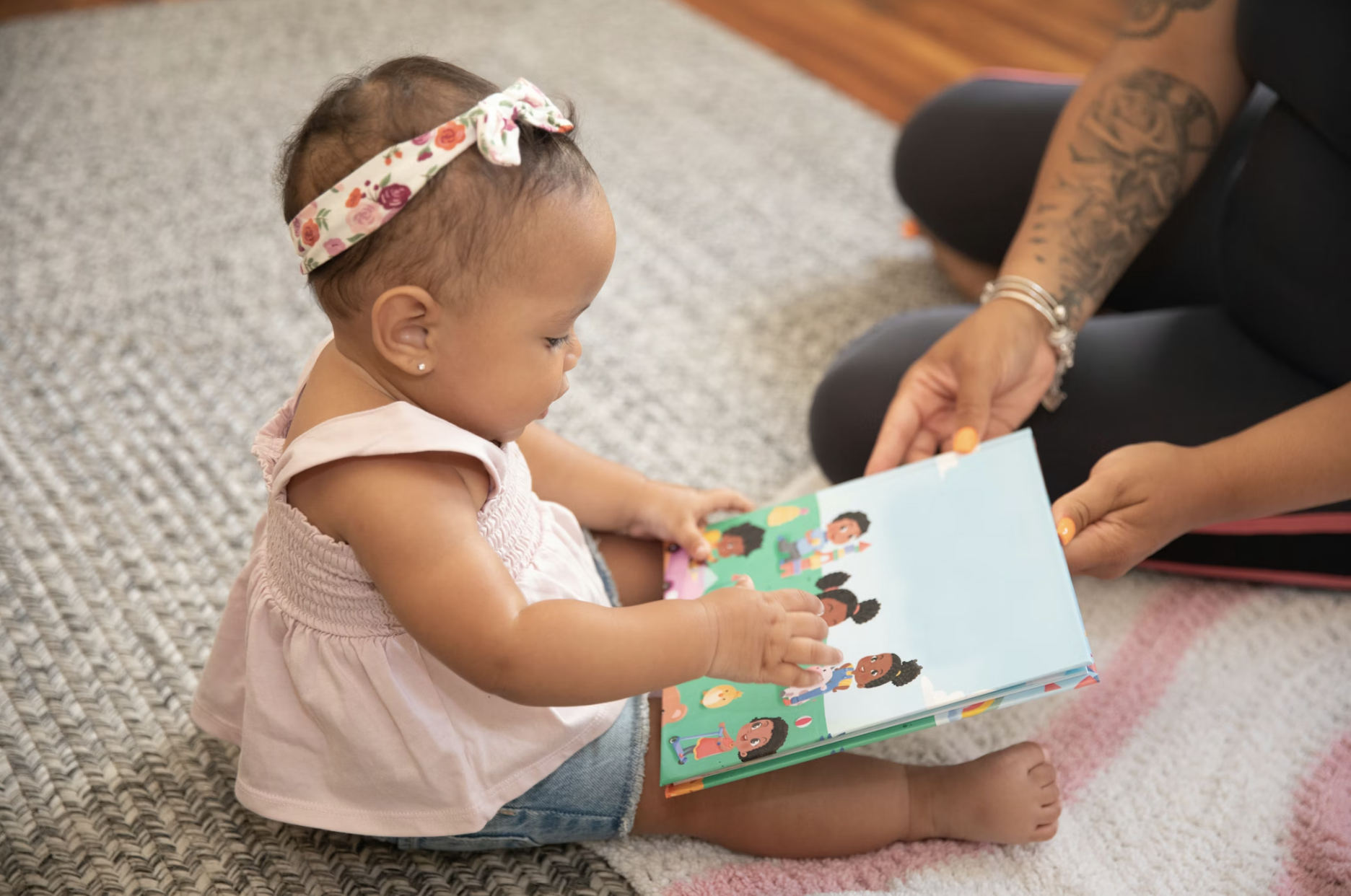
Your child picks up a book and stares at it. The letters are just unfamiliar shapes right now — meaningless. But after going through the same letters and words a couple of times, sounds start to be associated with symbols. A symbol connects to a word. A word connects to a meaning.
Hallelujah! Your child just learnt how to read.
On the surface, this may look effortless. But what happens inside a child's brain during those early reading moments is nothing short of remarkable.
Understanding it will change how you support your child through the process.
Here's something you didn’t know — and it might change how you think about the whole process. When your kiddo is learning to read, their brain forms a relation between the visual cortex, which processes what we see, and the auditory cortex, which processes what we hear.
Every time a child decodes a new word, a new neural connection forms. The letter r and the sound it makes become linked. That link is reinforced through repetition until it becomes automatic. The brain doesn’t learn to read by memorizing whole words as pictures. It does so by building a reliable system for converting printed symbols into sounds, and then the sounds into meaning.
Readers who learn to connect letters to sounds first develop stronger, more efficient neural pathways in the left hemisphere — the region associated with skilled, fluent reading. This is one of the benefits of reading; you can see the signs long before your child reads their first word independently.
Learning to read requires the brain to build entirely new connections — and honestly, it's doing a lot more heavy lifting than it gets credit for.
You know that moment when your toddler 'reads' a book by making up the story from the pictures? That's not them being silly — that's stage one of their reading journey. The ‘marks’ and ‘characters’ on a page represent words, and words represent things in the world. This is why reading aloud to babies and toddlers matters so much. They are not learning letters yet. The benefits of reading at this stage are not about decoding. Instead, they are about introducing your child to the language and the written word.
Next comes the stage of phonemic awareness. It is the ability to hear and manipulate individual sounds that make up words. Children who can identify rhymes, clap out syllables, and hear the difference between cat and bat have a significant head start when formal reading instruction begins.
Then comes phonics.
Phonics involves connecting those sounds to their written symbols. Research is emphatic that systematic, explicit phonics instruction produces the strongest results. Children who are taught to decode words in their early ages, through sound-letter relationships, read more accurately and can transfer that skill to words they have never seen before. It's like giving them a secret code for the entire English language!
The final stage is called fluency. It comes when decoding becomes automatic and the brain can focus fully on comprehension. This is when reading becomes genuinely pleasurable.
The benefits of reading in the early years extend well beyond just literacy. Children who are read to regularly enter school with broader vocabularies, stronger attention spans, and a greater capacity for empathy.
Reading also contributes to the child’s emotional development. Stories give children a safe space to encounter feelings and perspectives beyond their own experience. Think about it. A 4-year-old who has listened to hundreds of stories has already practiced — in imagination — navigating friendship, fear, and triumph.
You don't need to wait for formal school instruction to begin supporting your tiny tot to read. Instead, surround your child with language — spoken, sung, and read aloud — as frequently and engagingly as possible.
Our Little Readers game brings exactly this into your child's daily routine. Cozy storybooks and read-alouds featuring characters your tiny tot will adore!
And VOOKS, our animated storybook experience, brings beloved tales to life in a format that holds even the shortest attention spans. Let your little angel dive into the world of stories and fairytales long before they can decode a word themselves.
Can your little reader connect letters with sounds already? ABC Animal Adventures introduces letter recognition through the friendliest possible cast of characters. Each interaction reinforces the sound-symbol connections. Neuroscience identifies this as the core of how to read for kids.
The science is settled. The benefits of reading accumulate from birth, through exposure to spoken language, stories, and books. Children who arrive at formal reading instruction with a love of stories and an ear for language already have a head start on how to learn to read.
You don't have to be a reading specialist to give your child a strong start. You just have to read with them, often and joyfully, and let the right experiences do the rest.


Works for both iOS & Android
via smart one-link redirect