Published by Kiddopia Team

 Ages 2–7 · Educational · Learning
Published by Kiddopia Team
Ages 2–7 · Educational · Learning
Ages 2–7 · Educational · Learning
Published by Kiddopia Team
Ages 2–7 · Educational · Learning
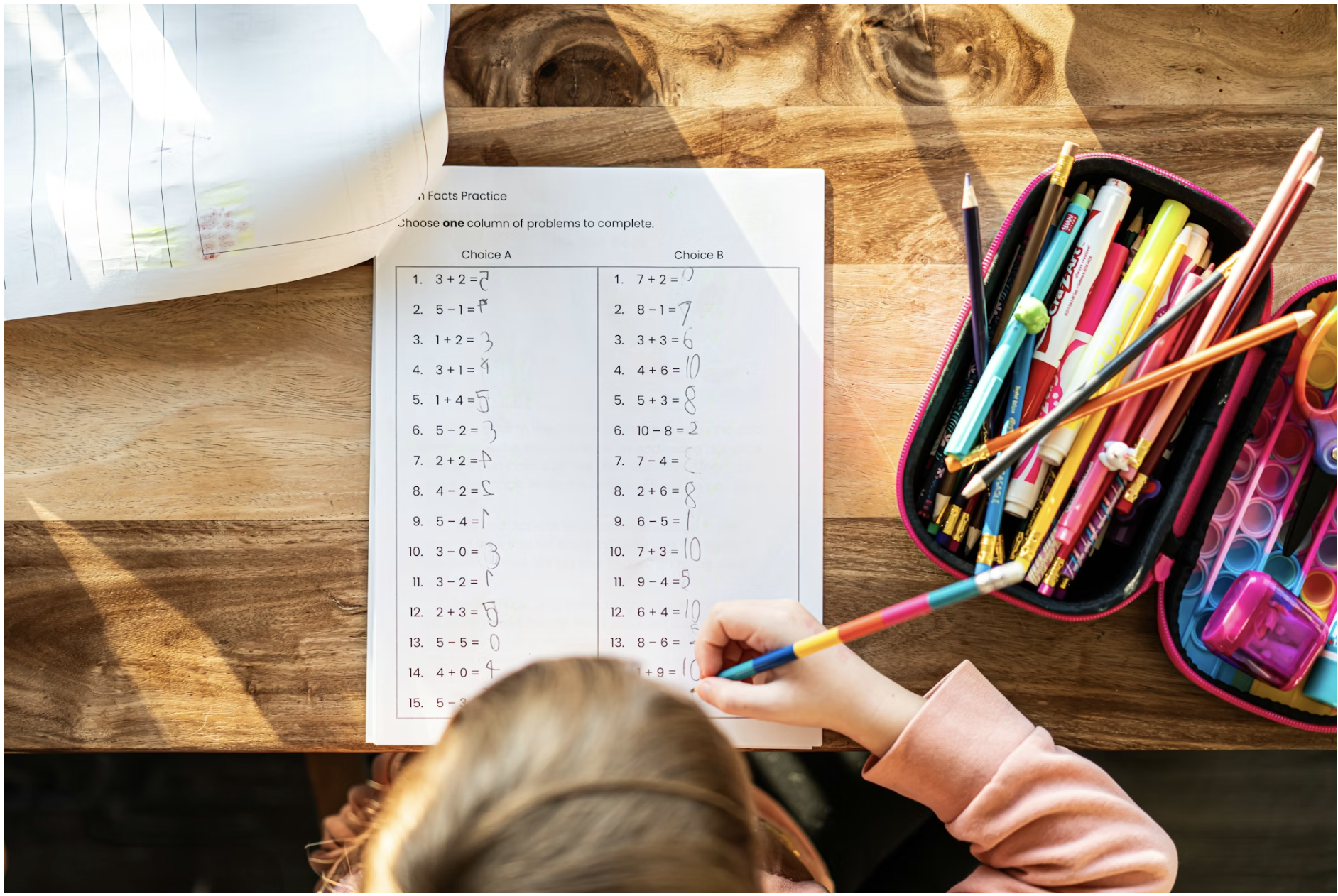
There's a quiet pride that hits when your child does something with numbers you didn't teach them.
They hand out exactly four crackers to each person at the table without being asked. They tell you the blue cup has more water than the red one. They spot a pattern in the floor tiles and finish it with their finger before you even see it.
You didn't teach them that. And yet, there it is, a confident observer who knows numbers.
And these moments aren't accidents. They're the result of your kiddo being steadily and playfully introduced to numbers, sequences, and patterns.
According to numerous studies, early math skills are the single strongest predictor of later academic achievement. It is shown that children who arrive at kindergarten with number sense and pattern recognition already in place stay ahead in ways that build on themselves year after year. While it all comes down to cognitive development and skillset, math does help enhance the decoding of patterns and comprehension more quickly.
That said, the question now is, how can you give your child that foundation? And without making math feel serious.
Most parents think of school as the place where learning begins. But research suggests otherwise. By the time a child sits down in a kindergarten classroom, the foundational patterns for how they relate to numbers, sequences, and problem-solving are already taking shape.
Many studies also show that children who enter kindergarten behind in early math tend to stay behind in academics. And closing that gap later takes significantly more effort from the family as well as the educators.
This is why the preschool years are important for your child’s mathematical skillset. But this doesn’t mean you have to sit with your toddler and make them cram concepts and numbers every day.
All they need is to practice through a series of engaging activities that don’t feel like learning at all. Fun math for preschoolers does not require flashcards or structured lessons, either. It requires the right choice of math games that make the subject feel easy and approachable.
Not every game that involves numbers is doing real work on your child's development. The best math games for preschoolers share a few specific qualities:
Our game Math Whiz does exactly this. Little ones get to count, distinguish, classify, and compare through challenges that feel like adventures rather than exercises. Your tiny mathematician isn't filling in a worksheet. They're actively solving problems. And that distinction is what makes all the difference.
We also have Buzzle if your toddler likes puzzles. The game has 90+ interactive puzzles across eight themes, some of which bring nursery rhymes to life. Pattern recognition, sequencing, and spatial reasoning all show up here, disguised as activities a 3-year-old finds irresistible.
For older preschoolers ready for a bit more logical challenges, Little Coders introduces sequences and directional thinking through coding adventures with Captain Kidd. It's the kind of fun math for preschoolers that sneaks in serious cognitive work while the child is busy having a wonderful time.
Math anxiety starts in middle or high school. But it can be traced back to the first time your child finds numbers hard, or the first time they get an answer wrong and get embarrassed, which eventually translates into the belief that math is simply not for them.
Every good approach to fun math for preschoolers interrupts that cycle before it starts. When a child's earliest repeated experience with numbers is joyful and fun, their brain files math under “things I can do.’’
That internal categorization follows them into every classroom they will ever sit in.
A kindergartener who already finds numbers interesting will engage more readily with whatever their teacher introduces. They'll try harder, recover faster from mistakes, and ask more questions.
Confidence at this stage isn't a personality trait. It's something that is built through the experiences a child has before formal school begins.
The right time to introduce math through play is earlier than most parents think. It is also far more casual than most parents imagine. You don’t need to set up a learning schedule. Just pick out a game that focuses on making math interactive and not boring.
Fun math lessons for kindergarten land best when they build on a foundation already in place. Children who have spent ages 3 and 4 playing games that involve counting, sorting, pattern-making, and problem-solving arrive at that first formal lesson already fluent in the language of math.
This is exactly the window that fun math for preschoolers is designed for. And in Kiddopia, every game is designed for children aged 2–7, ad-free, with no external links and no interruptions. Just your child, a challenge that meets them where they are, and the quiet confidence that grows every time they figure something out.


Works for both iOS & Android
via smart one-link redirect