Published by Kiddopia Team

 Ages 2–7 · Educational · Learning
Published by Kiddopia Team
Ages 2–7 · Educational · Learning
There's a moment in every preschooler's life when they discover that a wooden spoon and an upside-down pot make a drum. From then on, every pot in the house is at risk. It's loud, and it means your child is starting to figure out rhythm.
Anyone can lead music activities for preschoolers, including parents who struggle to hold a tune (we got you!). Kids pick up a surprising amount from music. Songs help with new words, remembering things in order, and keeping a beat. Here’s the best part: you can do most of this with your voice, your hands, and whatever's in the kitchen! Let’s go!
Most music activities for preschoolers start with rhythm, and names are an easy place to find it. Clap once for each part of your tiny tot's name. "Ol-i-ver" gets three claps. "Max" gets one. Try the names of family members, pets, and favorite foods next. "Spa-ghet-ti" is a crowd-pleaser!
This kind of clapping helps with reading later on, since kids are hearing how words break into parts. It also works in the car, in line at the store, or while waiting for the pasta water to boil.
Homemade instruments turn music activities for preschoolers into craft projects first and music activities later. A few spoonfuls of rice in a sealed plastic bottle make a shaker. A tissue box with rubber bands stretched across the opening makes something close enough to a guitar. Pots, pans, and an empty oatmeal canister give you a full drum kit, along with a headache.
Paper plates work too. Fold one in half with a handful of dried beans inside, staple around the edge, and it rattles a lot like a tambourine. Younger kids may need help with the stapler, and possibly with not eating the beans.
Once the instruments are ready, play loud and quiet. Shake the rice softly like rain, then loudly like a storm. Ask your child to copy a pattern you tap out, then have them make one up for you. Some of their patterns will go on for a very long time.
Music and movement activities for preschoolers are perfect for days when nobody can sit still. Put on a song with a clear beat and march around the living room. Switch to something slow, and everyone tiptoes. Then speed it up again and see who can keep up.
Scarves or old dish towels are great for dancing. Kids wave them high for high notes and low for low ones, or swirl them around when the music gets dramatic. Music and movement activities for preschoolers like this help with balance and body control, and they're a reliable way to burn off energy before nap time (so no one’s running a marathon in their bedroom at midnight).
A listening walk is a calmer option. Head outside and stop every so often to listen. Ask your kiddo what sounds they can hear, like birds, a car horn, or a dog barking far away. Some kids will start tapping along to the sounds they find.
Little songs make routines smoother. A cleanup song, a handwashing song, and a getting-in-the-car song can all be made up on the spot, and the sillier the lyrics, the better. Preschoolers often cooperate with a song when they'd ignore the same request in plain words.
Call-and-response singing is great for language. You sing a line, and your child sings it back. Change one word each time and see if they notice. Most of them will, and they'll correct you loudly.
Music activities for preschoolers can also help with memory. Kids learn the days of the week, the alphabet, and numbers far faster when there's a tune attached.
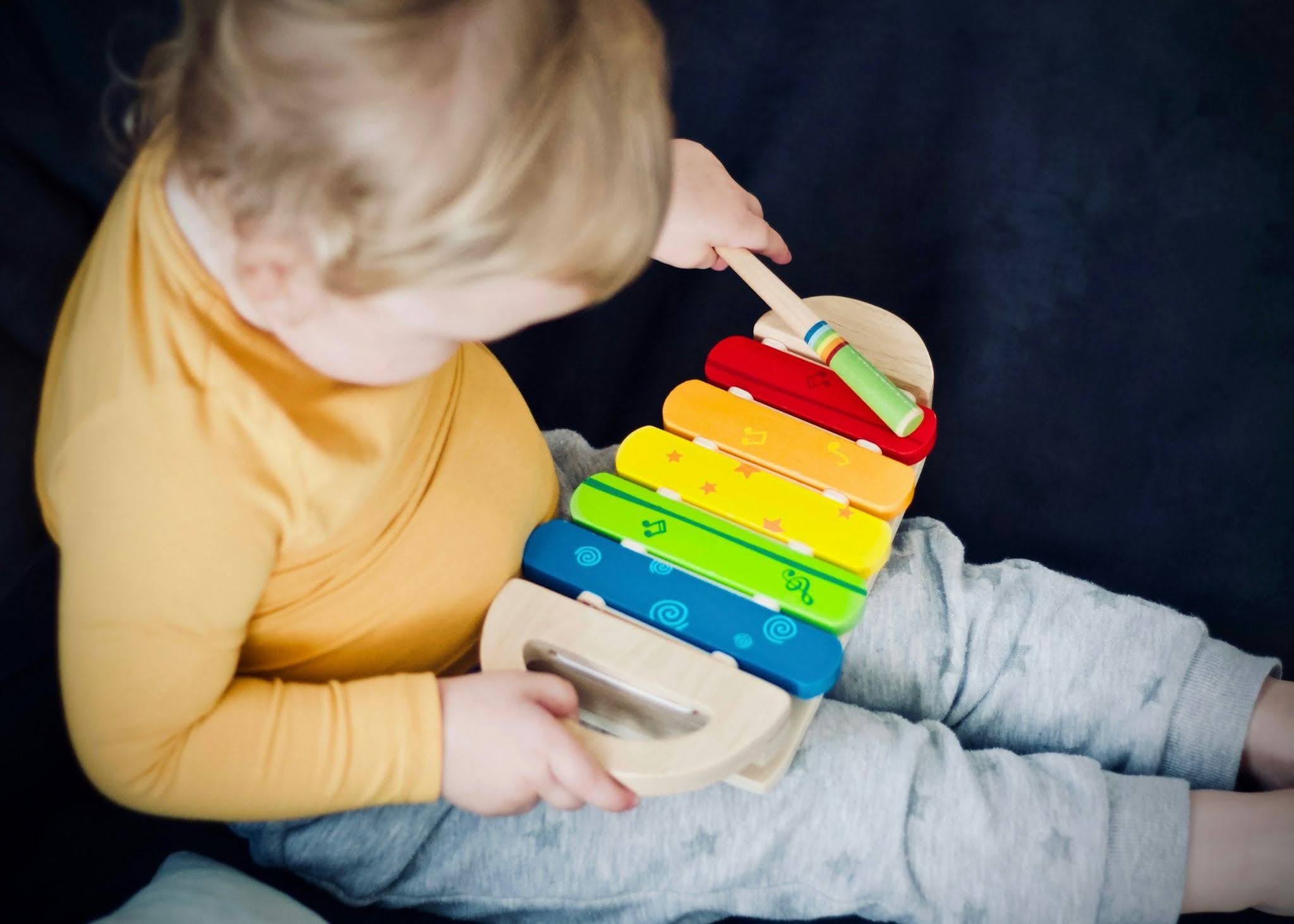
Our game Music Time lets kids try the guitar, the piano, the xylophone, and the drums. They can play nursery rhymes like "Twinkle, Twinkle, Little Star" and "Baa, Baa, Black Sheep," or make up their own tunes.
Then there’s Learn with Songs, which mixes singing and dancing with preschool basics like the seasons, days of the week, and good manners. It pairs well with music and movement activities for preschoolers at home, especially on rainy days. A win-win!
Music activities for preschoolers tend to get a little chaotic, but who cares? Expect some off-key singing and dancing that looks more like flailing, plus at least one pot that never quite recovers. But hey, that pot did its job.


Works for both iOS & Android
via smart one-link redirect