Published by Kiddopia Team

 Ages 2–7 · Educational · Learning
Published by Kiddopia Team
Ages 2–7 · Educational · Learning
Ages 2–7 · Educational · Learning
Published by Kiddopia Team
Ages 2–7 · Educational · Learning

It’s not like your little one was born with an understanding of emotional cues. But gradually, in the process of growing up, they learn to cry when they're frustrated. They also light up when someone they love walks in the room.
Emotions arrive naturally. But managing them? That's a skill that takes time, practice, and the right kind of support to hone.
Social-emotional learning, or SEL, is a skill kids imbibe as a part of growing up. They learn to understand their own feelings, read other people’s emotions, build relationships, and navigate conflict. Children with strong SEL skills are better equipped for school, have healthier friendships, and are more resilient in life.
We get it. This sounds like yet another curriculum your tiny tot is being subjected to follow, but social-emotional activities for preschoolers include storytelling, art, and breathing games, among other emotional development games for preschoolers.
Learning should feel natural. That said, here are 10 ways you can build social skills through activities with your kids. Let’s dive in!
This game is one of the simplest, most hilarious, and most surprisingly powerful emotional development activities. You and your toddler can take turns acting out emotions, such as happiness, frustration, nervousness, or pride. Then let your child guess what you're feeling, and switch.
This game helps build the emotional vocabulary children need before they can learn to handle their emotions. For example, a child who can't name "frustrated" will just scream. But if your child can name it, that’s the first step towards managing it.
Before bedtime or after school, make it a habit to ask your child: "What's one word for how you're feeling right now?"
Over a period of time, this ritual normalizes emotional awareness as part of daily life. Why leave the life skill chapter of emotional awareness till your little one experiences their first meltdown? This exercise will help your child articulate their emotions and stay calm even during adversities, very early in life.
Children should be taught to check in with their feelings and know that there’s nothing wrong with being emotionally conscious. Check-ins allow them the space to feel and then, react accordingly.
3. Collaborative Storytelling
This is one of the most interactive social-emotional activities for preschoolers. Here’s what you have to do.
Start a story. "Once upon a time, there was a bear who was feeling left out…" And let your child continue it. Take turns to add one sentence at a time until you reach an ending together.
Research has consistently found that storytelling activates multiple lobes of the brain simultaneously. This includes the side of the brain that processes emotion and social understanding. Besides, when children build narratives around characters with feelings and problems, they're practicing perspective-taking in the most natural way possible.
And this is why collaborative storytelling is one of the richest social-emotional development activities you could do with your adorable toddler.
Emotional art helps children (and adults!) better understand what they feel inside. It also helps them process their emotions in a much calmer way.
Bring out paper, paint, or clay, and ask your child to draw what anger (or any other emotion) feels like. Through this, you get to see how your child perceives different feelings.
Remember, there are no wrong answers. The power here is in the externalization — taking an internal experience and giving it form outside the body. The advantage of doing this activity is that children who express emotions through art build the same processing muscles they later use in conversation and self-regulation. So you’re not only getting to know what goes on in your toddler’s mind better, but also contributing to their physical growth.
By the way, did you know that our game, Coloring Pad, can also awaken the Picasso in your little genius? From festive scenes to favorite characters, they can color anything they want with any coloring tool they want!
Sit with your child, and set up hypothetical scenarios for them. For example, "You and your friend both want the same toy. What do you do?"
After you have set the scene, act it out together. You can use stuffed animals or dolls as props.
Building social skills through activities like this gives children a rehearsal space before the stakes are real. They practice negotiation, empathy, and conflict resolution in a context where getting it wrong is not a bad thing.

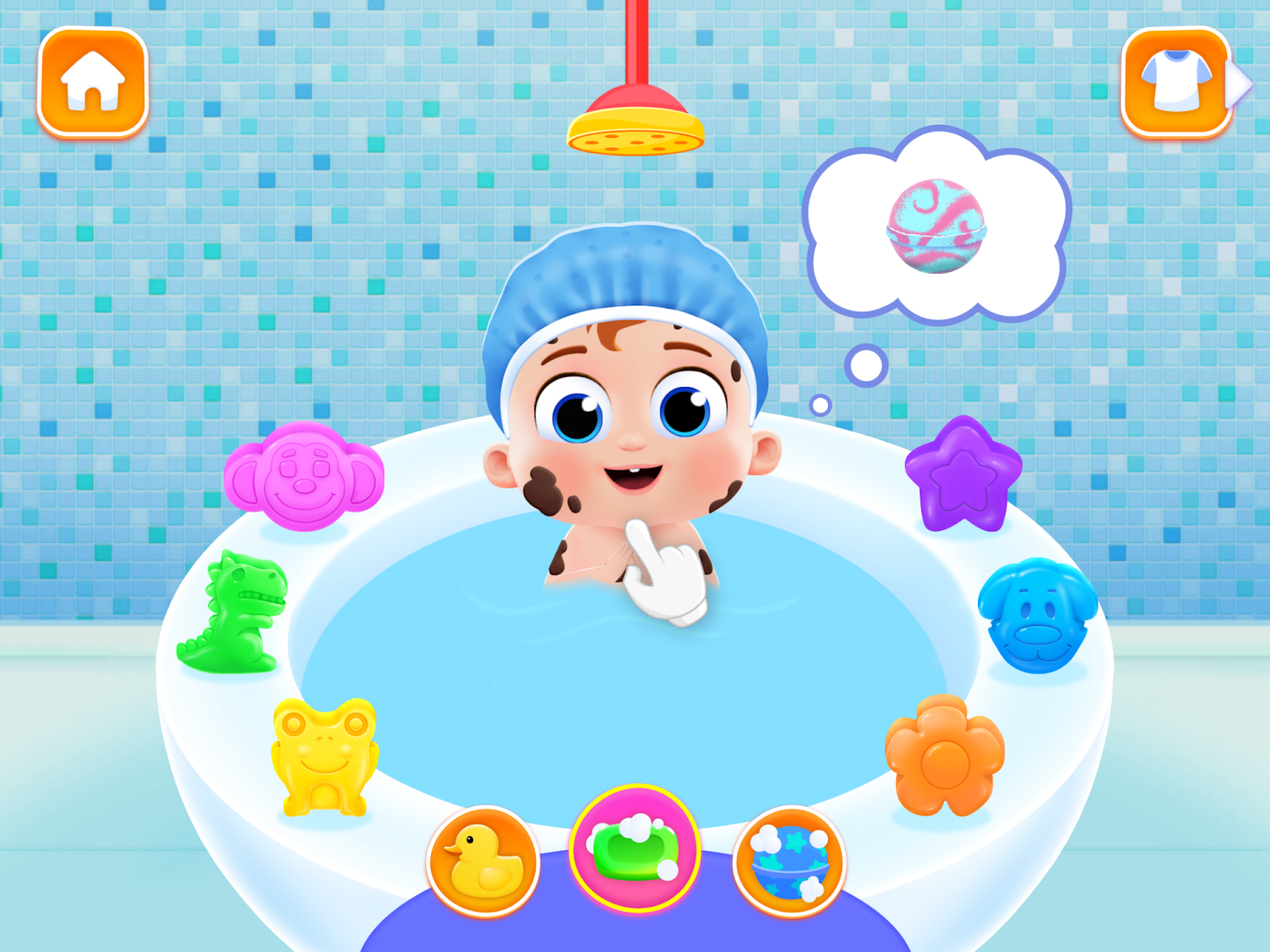
Children who role-play social scenarios are measurably better at handling peer conflicts when they arise in real life. For this, we offer an array of role-playing games for kids in our app. Try Moonbug’s Little Angel™ and watch your little kiddo play dress-up and enjoy bathtime and bedtime with their new best friend—Baby John™.
We also have role-playing games featuring the PJ Masks and our very own Captain Kidd, if your toddler adores superheroes.
Teach your child to take three slow breaths. Ask them to pretend they're blowing a giant balloon, slowly, until it's full. Then, let the air out.
This is a self-regulation skill. It is one of the core competencies of emotional development. When children learn they can physically change how they feel by controlling their breath, they gain something profound: agency over their emotional state. Practice it during calm moments so it's available during stormy ones.
Draw an emotion on a whiteboard. It can be a sad face, a worried face, or a happy smiley face. Then ask your child to name what the face on the whiteboard might be feeling and why. Slowly erase it as they start guessing.
As an emotional activity for preschoolers, this one teaches children how to ‘pass’ emotions. The sheer act of watching a feeling literally disappear makes an abstract concept concrete and reassuring.
Emotions sometimes seem enormous and permanent, so engaging your kid in such social-emotional activities for preschoolers can be transformative.
Cooperative games help children manage their own needs alongside someone else's. They learn to communicate, compromise, and experience the specific satisfaction of achieving something together. Studies show measurable improvements in cooperation and reductions in aggression among preschoolers who regularly engage in this kind of play.
Journaling is the best way to express. And this works even if your child can't write yet.
Here’s what you can do. Ask your child to name one thing that made them happy or sad, and draw it together. Over the coming weeks, you will build a small record of moments your toddler experienced. This kind of journaling helps them identify and address their emotions.
Journaling has well-documented effects on emotional well-being across all ages. The earlier the habit is established, the more naturally it becomes part of how a child processes experiences. This may be one of the simplest social-emotional activities for preschoolers that can be added to their routines.
Another way to boost SEL is to “watch and learn”. Choose books featuring characters who navigate real emotions — jealousy, fear, disappointment, excitement.
Read together and pause to ask: "How do you think she feels right now?" "What would you do if that happened to you?"
The best social-emotional activities for preschoolers create a safe distance from real feelings. And a character's problem is easier to think through than your own, and conversations that happen during storytime often become the template children draw on when navigating their own hard moments.
The skills built through these activities, be it emotional vocabulary, self-regulation, empathy, or cooperation, don't stay in the playroom. They walk with your child, from adolescence to adulthood.
These skills eventually contribute to every relationship and challenge your child will face as they grow. Research consistently shows that children with strong SEL foundations perform better academically as well. They also experience fewer behavioral difficulties.
Each of these activities helps children develop an emotional quotient through their hobbies. Play, stories, art, movement—these are the languages preschoolers speak fluently. When social-emotional learning is embedded in those experiences rather than delivered as a lesson, it lands differently. It becomes part of how children understand the world.


Works for both iOS & Android
via smart one-link redirect